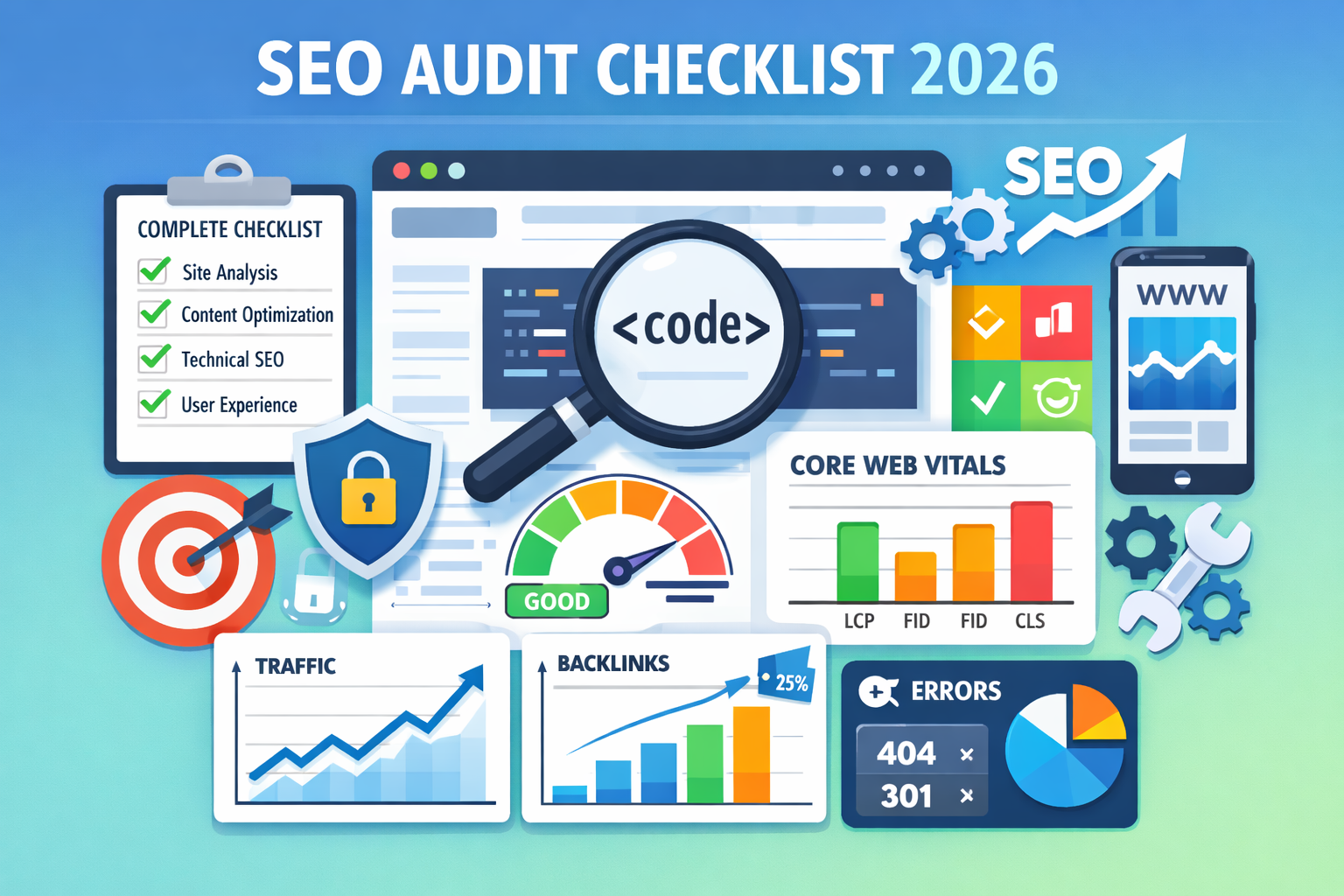
If you want your website to rank higher, attract organic traffic, and convert visitors into customers, you must perform a Complete SEO Audit Checklist 2026. SEO is not a one-time task—it requires regular evaluation and improvement.
I am Golam Murshed Jony, an SEO expert and digital marketer with experience in optimizing websites for search engines and user experience. This guide will walk you through a practical, human-friendly SEO audit process that helps you identify problems and fix them.
If you are searching for professional assistance, working with a trusted SEO Specialist in BD can make a huge difference in rankings and visibility. Businesses that rely on organic search need expert strategies to stay ahead.
Let’s dive deep into the ultimate SEO audit checklist.
What Is an SEO Audit and Why Does It Matter?
An SEO audit is the process of evaluating your website’s search engine performance. It helps you find technical problems, content issues, and ranking barriers.
Without an audit, you may be losing traffic without realizing it.
SEO audits matter because:
- They improve search visibility
- They enhance user experience
- They increase website speed
- They fix broken links and indexing issues
- They boost conversion rates
If you want professional support, a reliable seo service provider in bd can handle audits and optimization effectively.
Why SEO Audits Are Critical in 2026
Search engines evolve every year. Google updates algorithms frequently, affecting rankings.
In 2026, SEO audits focus on:
- AI-driven search optimization
- Core Web Vitals and user experience
- Mobile-first indexing
- Semantic search improvements
- Content quality and authority signals
Modern SEO is not just about keywords—it is about delivering value.
Complete SEO Audit Checklist 2026 (Step-by-Step)
Let’s explore the ultimate checklist.
1. Technical SEO Audit
Technical SEO ensures search engines can crawl and index your site.
Check these factors:
- Website indexing status
- Robots.txt configuration
- XML sitemap optimization
- Broken links and 404 errors
- Duplicate content issues
- HTTPS security
- Site architecture
If search engines cannot crawl your pages, rankings will suffer.
A professional seo specialist in bd can help diagnose technical problems.
2. Website Speed and Performance
Google prioritizes fast websites.
Core Web Vitals metrics:
- Largest Contentful Paint (LCP)
- First Input Delay (FID)
- Cumulative Layout Shift (CLS)
Ways to improve speed:
- Use caching
- Optimize images
- Minify CSS and JavaScript
- Use a Content Delivery Network (CDN)
Fast websites improve user engagement and rankings.
3. Mobile-Friendliness
Most users browse on mobile devices.
Check:
- Responsive design
- Mobile page speed
- Touch-friendly navigation
- Readable fonts
Google follows mobile-first indexing, meaning mobile performance matters.
4. Content Quality Audit
Content remains the backbone of SEO.
Evaluate:
- Relevance
- Originality
- Depth of information
- User engagement
- Keyword optimization
Avoid thin content. Provide value.
Use keywords naturally, including Complete SEO Audit Checklist 2026.
5. Keyword Research and Optimization
Keywords connect users with content.
Steps:
- Identify high-value keywords
- Analyze search intent
- Use long-tail keywords
- Avoid keyword stuffing
Target phrases like:
- SEO audit
- website optimization
- organic traffic growth
Keywords should flow naturally.
6. On-Page SEO Audit
On-page SEO improves individual pages.
Check:
- Title tags
- Meta descriptions
- Headings (H1, H2, H3)
- Internal links
- Image alt text
Every page should have clear optimization.
7. Off-Page SEO and Backlinks
Backlinks signal authority.
Quality matters more than quantity.
Strategies:
- Guest blogging
- Outreach campaigns
- Content marketing
- Link reclamation
Avoid spammy backlinks.
Work with professionals or a trusted seo service provider in bd for ethical link-building.
8. User Experience (UX)
User experience influences SEO.
Consider:
- Easy navigation
- Clear design
- Readable content
- Fast loading pages
Happy users stay longer and engage more.
9. Core Web Vitals Optimization
Core Web Vitals impact rankings.
Focus on:
- Speed
- Visual stability
- Interaction responsiveness
Google measures these metrics to evaluate websites.
10. Security and HTTPS
Security builds trust.
Ensure:
- SSL certificate
- Secure connections
- Protection from malware
HTTPS is a ranking factor.
11. Schema Markup and Structured Data
Schema helps search engines understand content.
Benefits:
- Rich snippets
- Better visibility
- Improved click-through rates
Use structured data for products, reviews, and articles.
12. Competitor Analysis
Analyze competitors to learn strategies.
Check:
- Top-ranking pages
- Keywords
- Content gaps
Learning from competitors helps improve performance.
13. Analytics and Performance Tracking
Data-driven SEO wins.
Use:
- Google Analytics
- Search Console
- Performance reports
Measure traffic and conversions.
14. Local SEO Audit
Local SEO targets geographic audiences.
Optimize:
- Google Business Profile
- Local keywords
- Customer reviews
Businesses in Bangladesh benefit from local search visibility.
If you need help, a professional seo specialist in bd can optimize local SEO effectively.
15. AI and Search Trends in 2026
AI impacts search.
Strategies:
- Semantic search optimization
- Answer-focused content
- Natural language processing
AI-driven search requires smarter content.
AI, GEO, and Future-Focused Audit Checklist
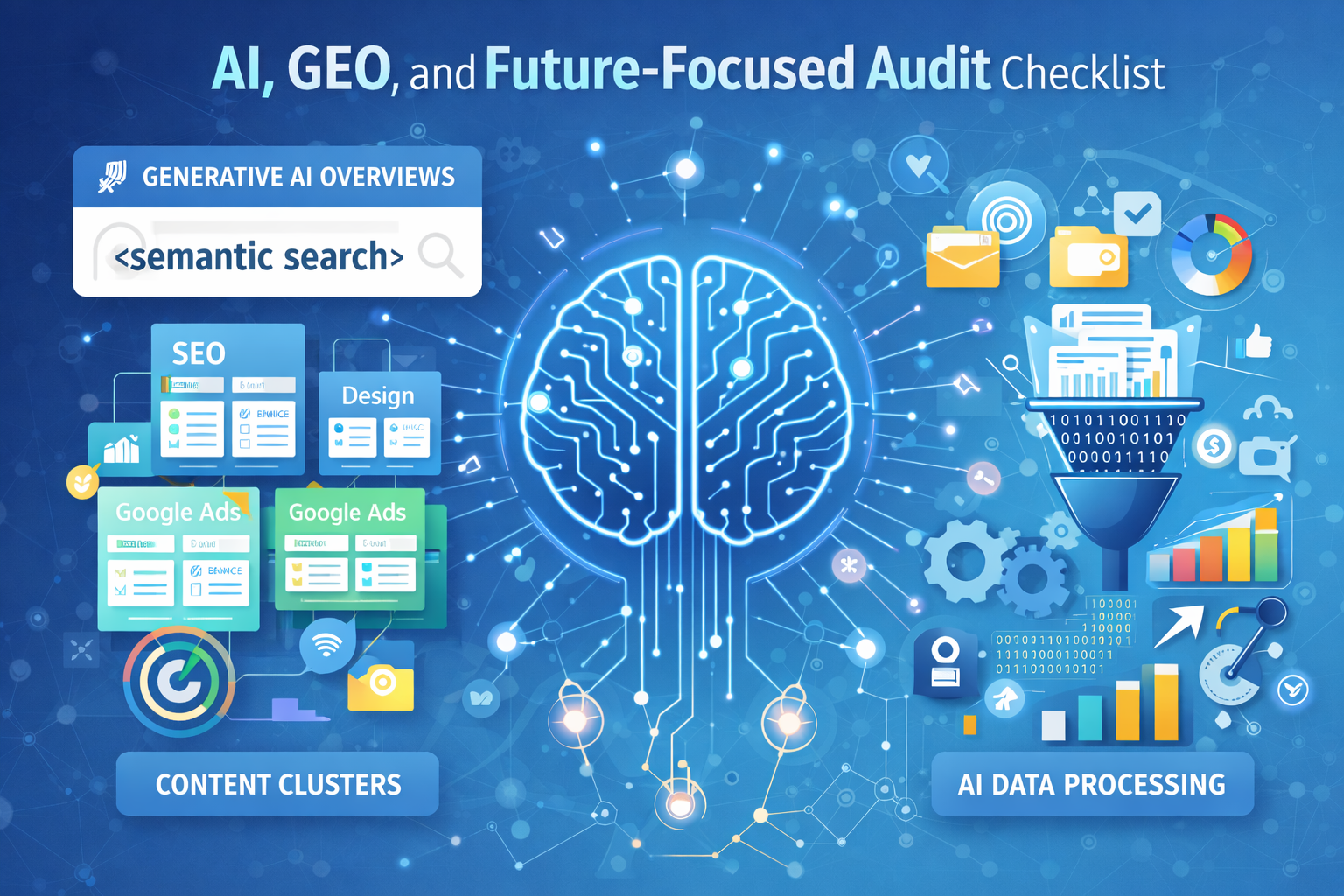
Search engines are evolving rapidly. With the rise of AI-driven results like AI Overviews, websites must go beyond traditional SEO and prepare for a smarter, context-driven search environment. That’s where AI readiness and Generative Engine Optimization (GEO) come into play. A future-focused audit ensures your website is not just optimized for rankings—but for visibility in AI-powered search experiences.
AI Overviews and Generative Search Readiness
AI-generated search results prioritize websites that clearly demonstrate topical expertise, authority, and structure. Unlike traditional search snippets, AI Overviews extract contextual meaning from content. That means your site must be logically organized and semantically strong.
During your audit, evaluate whether:
- Your content answers key questions within the first few paragraphs
- Each topic is covered in depth rather than superficially
- Related pages are internally linked in a meaningful, logical structure
- Service pages connect naturally with supporting blog content
AI systems analyze how well your content clusters around a topic. Structured content silos help AI understand your domain authority. For example, if you provide SEO services, your blogs, guides, and case studies should all interlink and reinforce that expertise. This strategic structure directly aligns with modern Generative Engine Optimization (GEO), where content clarity and contextual authority matter more than keyword stuffing.
Content Silos and Topical Authority
A well-organized website improves both user experience and AI interpretation. Content silos group related topics under clear themes such as SEO, web design, and Google Ads.
For example:
- SEO blog posts link directly to SEO service pages
- Web design articles support website development offerings
- Paid advertising content reinforces Google Ads expertise
This structure signals authority. When multiple pieces of content consistently support a central theme, search engines view your website as a trusted resource. Internal linking should feel natural and helpful, guiding users toward deeper knowledge while strengthening topical relevance.
Topical authority is no longer optional—it is essential for ranking and AI visibility.
Ongoing Monitoring and Iteration
An audit is not a one-time checklist. Search algorithms, AI systems, and user behaviors constantly change. A future-focused strategy requires continuous monitoring and refinement.
Revisit your audit quarterly to:
- Identify content gaps
- Update outdated information
- Improve page speed and technical performance
- Adjust internal linking structures
- Align with evolving search intent
Websites that commit to continuous improvement outperform competitors who treat SEO as a one-time project.
External Resources Worth Referencing
To strengthen your audit process, leverage trusted industry resources such as:
- Google Search Console documentation
- Google PageSpeed Insights
- Ahrefs and Semrush audit guides
- Google’s Search Quality Rater Guidelines
These tools provide valuable insights but should complement—not replace—strategic thinking.
In today’s AI-driven landscape, success belongs to websites that combine structured content, topical authority, and ongoing optimization. A future-focused audit ensures your site remains competitive, visible, and ready for the next generation of search.
Common SEO Audit Mistakes
Avoid these:
- Ignoring mobile performance
- Overusing keywords
- Neglecting technical issues
- Using low-quality backlinks
SEO requires balance.
How Often Should You Perform an SEO Audit?
Recommended frequency:
- Quarterly audits
- Monthly performance checks
- Continuous optimization
SEO is ongoing.
Final Thoughts
SEO audits are essential for online success.
The Complete SEO Audit Checklist 2026 helps:
- Improve rankings
- Increase traffic
- Enhance user experience
- Drive conversions
If you want professional support, consider working with a trusted seo service provider in bd.
SEO is not magic—it is strategy and execution.
For expert consultation and services, reach out to professionals who understand modern search optimization.
Frequently Asked Questions.
Q1: What is SEO audit?
SEO audit is the process of analyzing a website to find optimization opportunities for better rankings and performance.
Q2: Why is SEO audit important?
It helps identify technical issues, content problems, and ranking opportunities.
Q3: How often should I do SEO audit?
Every 3 to 6 months for optimal performance.
Q4: What tools can I use for SEO audit?
Google Search Console, Google Analytics, Ahrefs, SEMrush, and Screaming Frog.
Q5: How does SEO audit improve rankings?
It fixes technical problems and improves content quality.
Q6: What is AEO optimization?
AEO (Answer Engine Optimization) focuses on direct answers for search queries.
Q7: How can I optimize for AEO?
Use FAQ sections, structured data, and direct answers.
Q8: Does AEO help Google featured snippets?
Yes, structured answers increase featured snippet chances.
Q9: What type of questions work best for AEO?
Questions like “What is…?”, “How to…?”, and “Why…?” work best.
Q10: Is AEO better than SEO?
SEO drives traffic, and AEO improves direct answers. Both work together.