Google’s algorithm is the backbone of search engine operations, determining which web pages are displayed when users search for a particular query. Understanding how Google’s algorithm works is essential for anyone looking to improve their website’s visibility and performance on search engines. In this blog post, we’ll dive into the key components of the algorithm: crawling, indexing, and ranking. Whether you’re a technical SEO expert or someone new to digital marketing, this guide will give you clear insights into how Google works its magic.
What Is Google’s Algorithm?
Google’s algorithm is a highly sophisticated and continuously evolving set of rules and instructions that Google uses to rank websites and deliver the most relevant search results. When you search for something on Google, its algorithm determines which pages are the best match for your query and ranks them accordingly.
This ranking is determined by various factors, including relevance, quality, user experience, and authority of the page. Google employs several techniques, including crawling, indexing, and ranking, to process and rank the millions of pages available on the web.
Let’s break these steps down.
Understanding the Three Main Stages: Crawling, Indexing, and Ranking
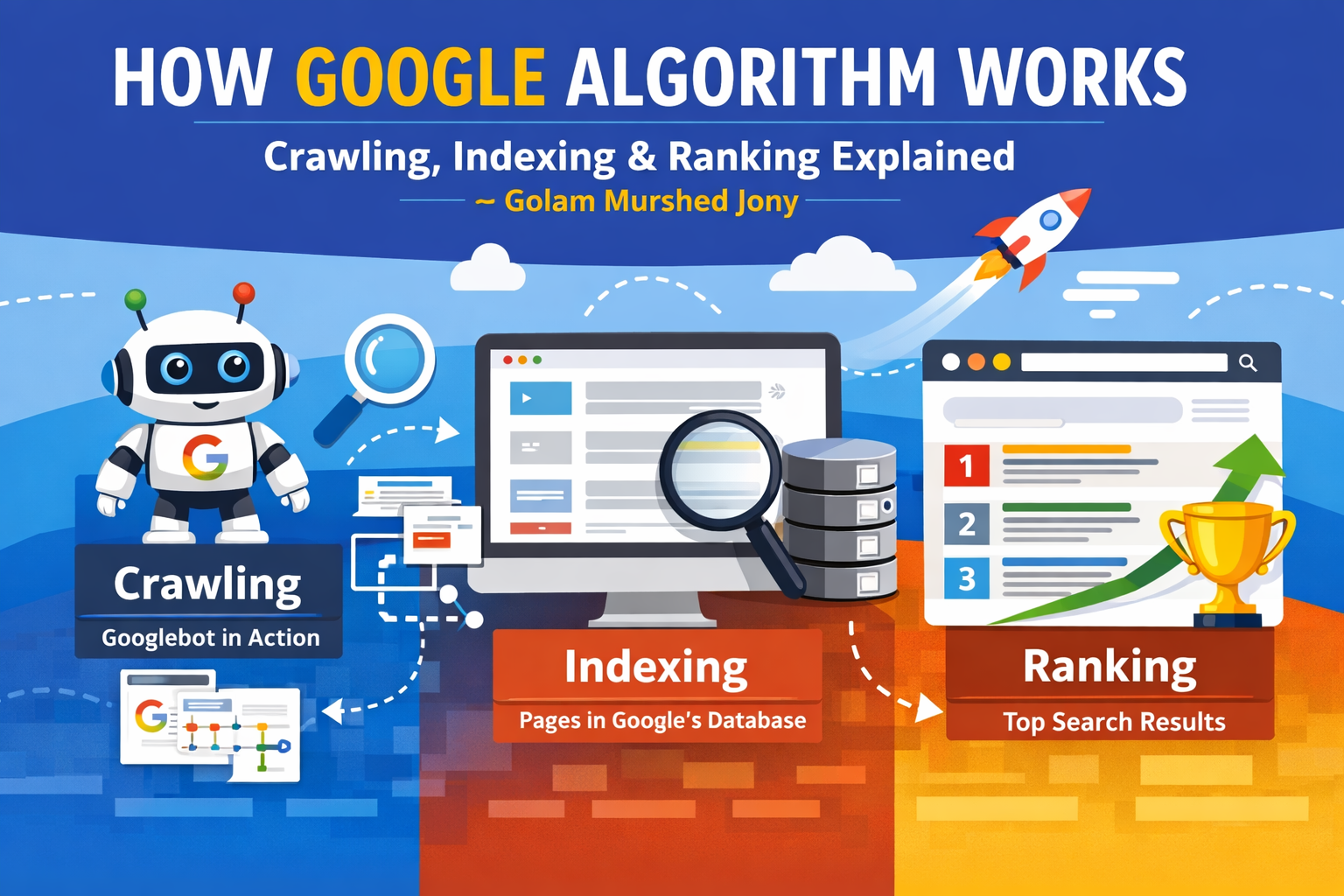
1. Crawling
Crawling is the first step in the Google algorithm process. It’s the method by which Google discovers new or updated web pages to add to its search index. Google’s web crawlers, also known as Googlebot, scan websites and gather information from the pages. These crawlers follow links from one page to another, ensuring that they explore all available content on the web.
- How Does Googlebot Crawl?
- Googlebot starts by visiting a page and analyzing the HTML content of that page.
- The bot then follows the links on that page to find more pages. This process allows it to find and discover new or updated content continuously.
- Can Google Crawl All Pages?
- No, Google may face issues crawling some pages due to various reasons like robots.txt settings, noindex directives, or page restrictions.
Googlebot typically follows internal links within your website and external links from other websites, which helps it discover new content and keep its index up to date.
Tip for SEO Experts:
To make sure Googlebot can crawl your website effectively, use the robots.txt file to control which pages should be crawled or not.
2. Indexing
Once Googlebot crawls a webpage, the next step is indexing. In simple terms, indexing means adding a page to Google’s massive database (index) that stores information about all the pages it has crawled.
- How Does Indexing Work?
- After Googlebot gathers content, it tries to understand what that content is about. This is done by analyzing various elements such as keywords, content structure, meta tags, alt texts, and more.
- Pages that pass the quality check are then indexed and available for display in search results.
- What Affects Indexing?
- Quality content: Pages that provide valuable, well-structured, and unique content are more likely to be indexed.
- Duplicate content: Pages with duplicate content might not get indexed or may rank poorly.
- Mobile-friendliness: Given the mobile-first approach by Google, mobile-optimized websites are more likely to be indexed.
Tip for SEO Experts:
Ensure that site structure and internal linking are optimized so Googlebot can easily find and index all your important pages.
3. Ranking
The final stage of the Google algorithm is ranking, where the search engine determines which of the indexed pages is the most relevant and should appear first when a user performs a search.
- How Does Google Rank Pages?
Google uses over 200 factors to rank pages. Some of the most important ranking factors include:- Relevance of content: Does the content address the user’s query in detail?
- Backlinks: Links from other authoritative websites can boost the ranking of your page.
- User experience: Factors like site speed, mobile optimization, and ease of navigation influence rankings.
- Content freshness: New, updated content can rank higher for time-sensitive searches.
- What Is the Role of Algorithms in Ranking?
Google’s algorithms, including Panda, Penguin, and Hummingbird, play crucial roles in determining rankings. These algorithms constantly evolve to ensure that only the most relevant, valuable, and authoritative pages show up at the top.
Tip for SEO Experts:
Focus on creating high-quality content and earning natural backlinks from trustworthy sources to improve your ranking position.
The Evolution of Google’s Algorithm
Google’s algorithm is not static — it constantly evolves to deliver more relevant, high‑quality search results. Over time, major updates have shifted how SEO works and what Google rewards. Here are some of the key algorithm updates that have shaped Google’s current search ranking system:
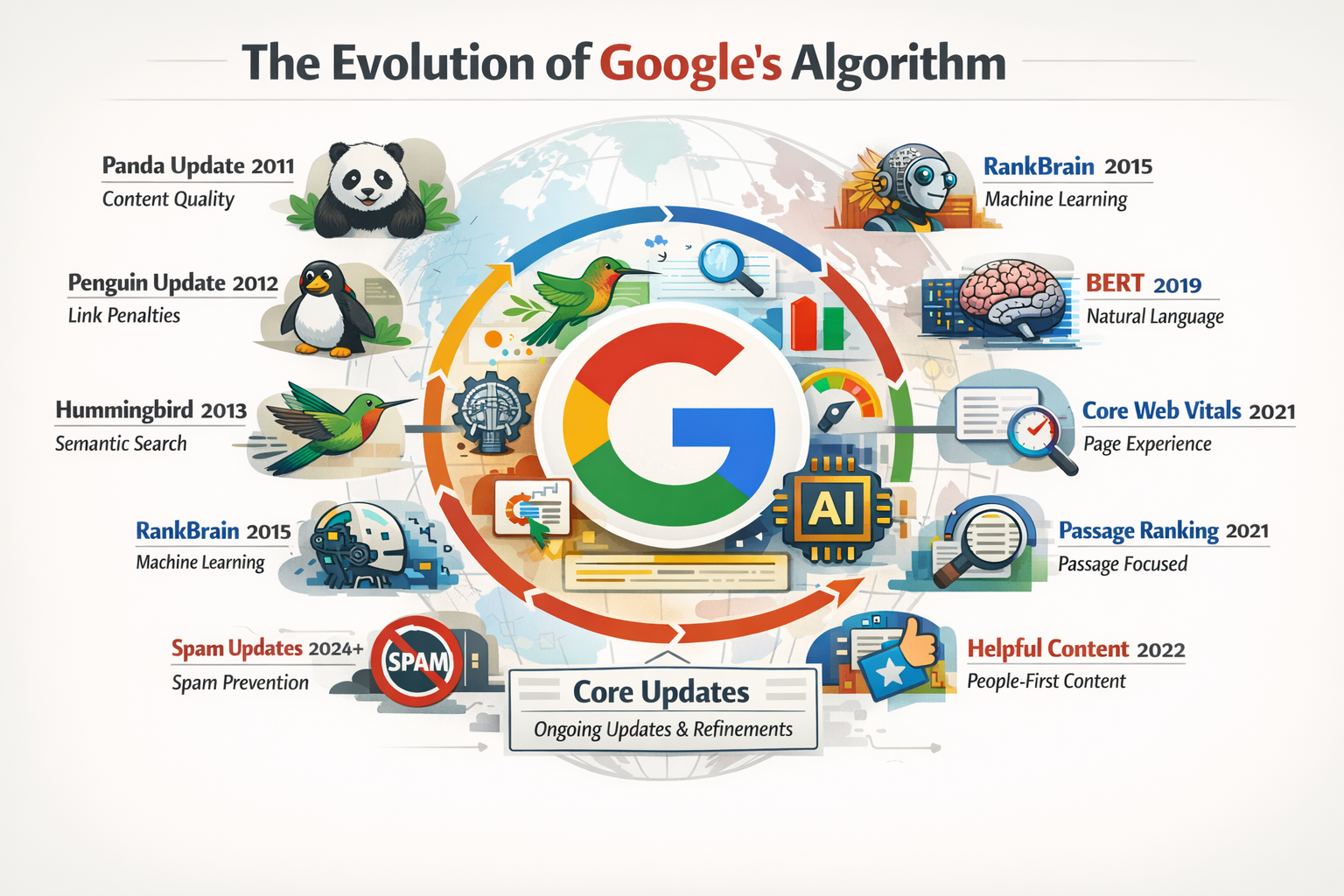
1. Panda Update (2011)
Focused on content quality, penalizing sites with thin, duplicate, or low‑value content. It emphasized the importance of useful, informative content for users.
2. Penguin Update (2012)
Targeted manipulative link building and spammy backlinks. It aimed to reduce the impact of low‑quality inbound links and reward more natural, high‑quality link profiles.
3. Hummingbird Update (2013)
Introduced semantic search capabilities, helping Google better understand user intent and the meaning behind search queries, rather than just matching keywords.
4. RankBrain (2015)
A machine‑learning based system that helps Google interpret complex search queries and deliver more relevant results based on context, not just keywords.
5. BERT (2019)
Improved natural language understanding, allowing the algorithm to better understand the nuances and context of words in longer, conversational queries.
6. Core Web Vitals & Page Experience Updates (2020–2021)
Google began factoring user experience metrics — such as loading speed, interactivity, and visual stability — into search rankings. This pushed SEO beyond content quality into technical performance.
7. Passage Ranking (2021)
Google enhanced its ability to rank specific passages from web pages, even if the overall page isn’t highly optimized for a query — increasing the importance of structured, well‑organized content.
8. Helpful Content Update (2022)
Designed to reward genuinely helpful, people‑first content. Pages that were written primarily for SEO rather than real users often saw ranking drops.
9. Core Updates (Ongoing)
Google periodically releases broad Core Algorithm Updates that affect rankings across the board. These can impact how Google assesses relevance, authority, and content quality.
10. MUM (Multitask Unified Model) (2023)
A major leap in AI understanding — MUM can interpret complex queries across text and images, and understand the context and intent at a deeper level than before.
11. Spam Updates & Ongoing Refinements (2024–2025)
Google continually releases spam‑focused updates to crack down on automated, low‑quality, or deceptive content. These updates keep search results cleaner and more reliable.
Best Practices for Optimizing for Google’s Algorithm
- Focus on User Intent
- Understand what your audience is looking for when they type a query. Focus on providing content that answers their questions or solves their problems.
- Optimize for Mobile
- With mobile-first indexing, it’s essential that your website is responsive and performs well on mobile devices.
- Improve Site Speed
- Site speed is a ranking factor, so ensure that your website loads quickly by optimizing images, reducing unnecessary scripts, and using a reliable hosting provider.
- Enhance Content Quality
- Publish long-form, in-depth content that is valuable to users. Use relevant keywords, and ensure proper keyword density.
- Earn Backlinks
- Backlinks from authoritative websites signal trust and relevance to Google, helping your pages rank higher.
- Use Schema Markup
- Implementing schema markup can help Google understand your content better and improve the chances of appearing in rich snippets.
How Google’s Algorithm Affects Your SEO Strategy
The core principles of Google’s algorithm (crawling, indexing, and ranking) directly impact your SEO strategy. To achieve optimal search engine performance, it’s crucial to:
- Ensure crawlability by fixing broken links and making your content accessible.
- Focus on high-quality content that is valuable, informative, and answers the user’s query effectively.
- Build a strong backlink profile to boost authority and trustworthiness.
- Optimize user experience by improving site speed, mobile usability, and navigation.
By focusing on these aspects, you’ll be able to align your website with Google’s algorithm requirements and improve its chances of ranking higher.
Conclusion
Understanding how Google’s algorithm works is essential for anyone looking to improve their website’s search engine ranking. Crawling, indexing, and ranking are the fundamental processes that Google uses to evaluate and rank websites. By ensuring that your site is optimized in these areas, you can significantly enhance your chances of ranking higher in search results.
If you want to stay ahead in the world of SEO, it’s vital to keep up with Google’s algorithm updates and always focus on providing high-quality content that aligns with user intent. A professional SEO expert in Bangladesh can help guide your strategies, providing insights and techniques tailored to the ever-changing landscape of SEO.
By keeping your website technically sound and user-focused, you’ll be setting yourself up for long-term SEO success.
FAQs
What is crawling in SEO?
Crawling is the process where Googlebot visits websites to discover content by following links. It’s the first step before indexing.
What is indexing in SEO?
Indexing is when Google stores the information it finds from a website into its massive database, making it accessible for search queries.
How does Googlebot decide which pages to crawl?
Googlebot decides which pages to crawl based on the links it finds on pages and the sitemap provided by the site owner.
What does Google’s ranking algorithm consider?
Google’s ranking algorithm considers factors like relevance, content quality, user experience, backlinks, and E-A-T (Expertise, Authoritativeness, Trustworthiness).
Why is E-A-T important in SEO?
E-A-T is critical because it helps Google assess the credibility of the content, ensuring that high-quality, trustworthy pages rank higher.
How can I improve my website’s crawling?
You can improve crawling by ensuring your website is easy to navigate, fixing broken links, and submitting an updated sitemap to Google Search Console.
What is a Googlebot?
Googlebot is the automated web crawler used by Google to discover and index new web pages.
What is a backlink in SEO?
A backlink is a link from another website to your own. Backlinks from reputable sites can boost your website’s authority and help improve your rankings.
What is the significance of content quality for ranking?
High-quality content that provides valuable, relevant, and well-researched information is more likely to rank higher on Google.
How often does Google update its algorithm?
Google makes frequent updates to its algorithm, ranging from minor adjustments to significant changes. It’s important to stay up-to-date with the latest SEO trends.