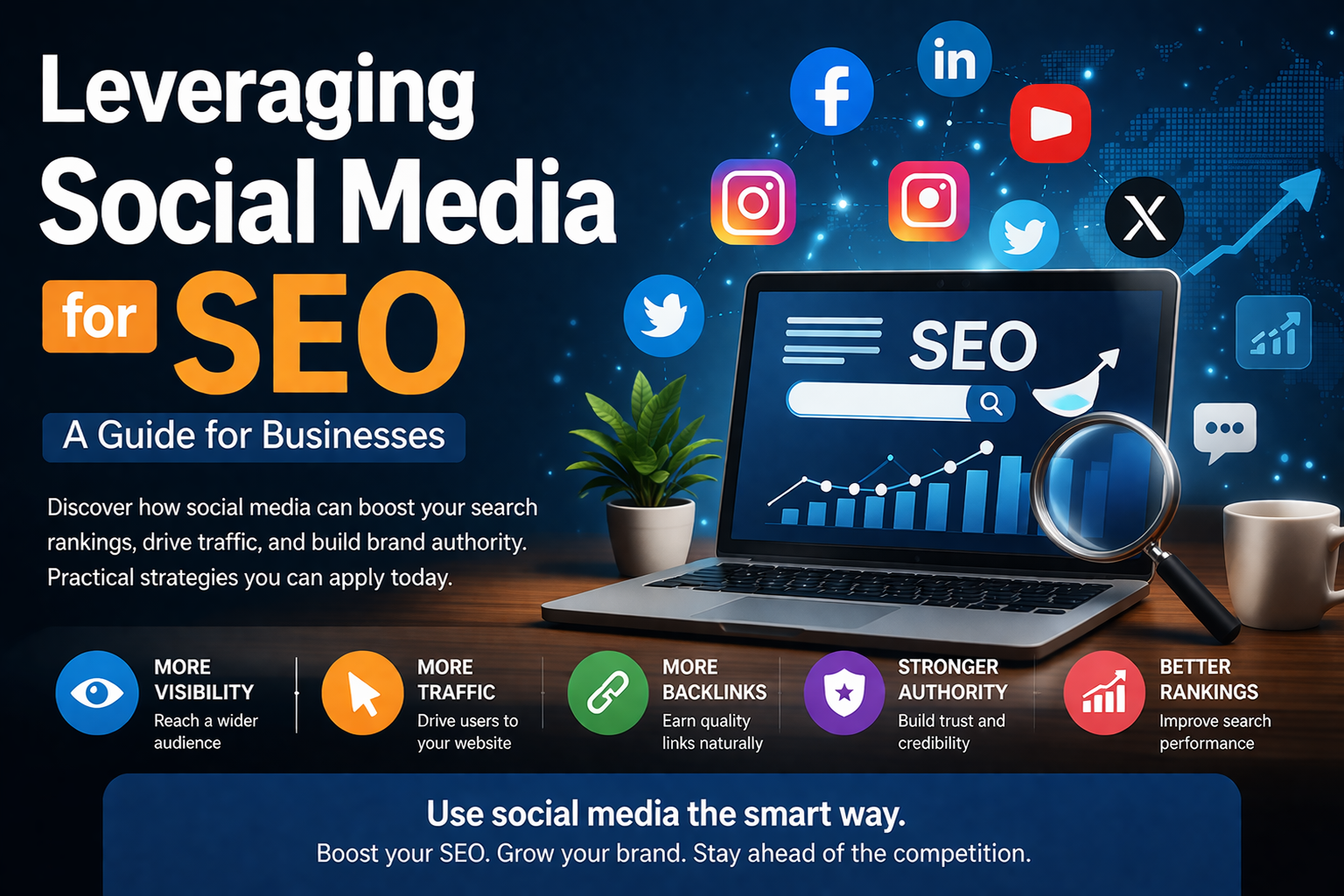
In today’s digital world, social media is more than just a place to connect with people. It is a powerful tool that can boost your search rankings and grow your brand online. Many businesses still treat social media and SEO as two separate things. That is a mistake. When used together, they can drive real growth. As Golam Murshed Jony explains, smart businesses use social platforms to support their SEO strategy and build long-term authority.
This guide will show you how to use social media for SEO in a simple and effective way. You will learn practical steps that you can apply right away.
What Is Social Media SEO?
Social media SEO means using social platforms to improve your website’s visibility in search engines. Social signals may not be direct ranking factors, but they play a strong supporting role.
When people share your content:
- More users see your brand
- More users visit your website
- More chances for backlinks
- Higher brand trust
Search engines notice these signals. They see your content as valuable and relevant.
Why Social Media Matters for SEO
Search engines aim to show the best content to users. Social media helps them find that content faster.
Here is why it matters:
1. Increases Content Visibility
When you share blog posts on social platforms, more people discover them. This drives traffic to your site.
2. Builds Brand Awareness
People trust brands they see often. Social media keeps your brand in front of users.
3. Drives Website Traffic
More clicks mean more engagement. This can improve dwell time and reduce bounce rate.
4. Helps Earn Backlinks
Great content gets shared. Shared content gets linked. Backlinks improve rankings.
5. Strengthens EEAT Signals
Consistency, authority, and engagement improve your credibility.
How Social Media Impacts SEO Directly and Indirectly
Social media does not directly increase rankings like backlinks do. But it helps in many indirect ways.
Direct Impact
- Indexing speed improves when content gets shared
- Brand searches increase
- Content discovery becomes faster
Indirect Impact
- More traffic
- More engagement
- More backlinks
- Stronger authority
These factors influence SEO performance.
Best Social Media Platforms for SEO
Not all platforms work the same. Choose based on your business goals.
Good for content sharing and community building.
Best for B2B marketing and authority building.
Great for visual branding and engagement.
Twitter (X)
Useful for real-time updates and trending topics.
YouTube
Powerful for video SEO and long-term traffic.
Step-by-Step Strategy to Leverage Social Media for SEO
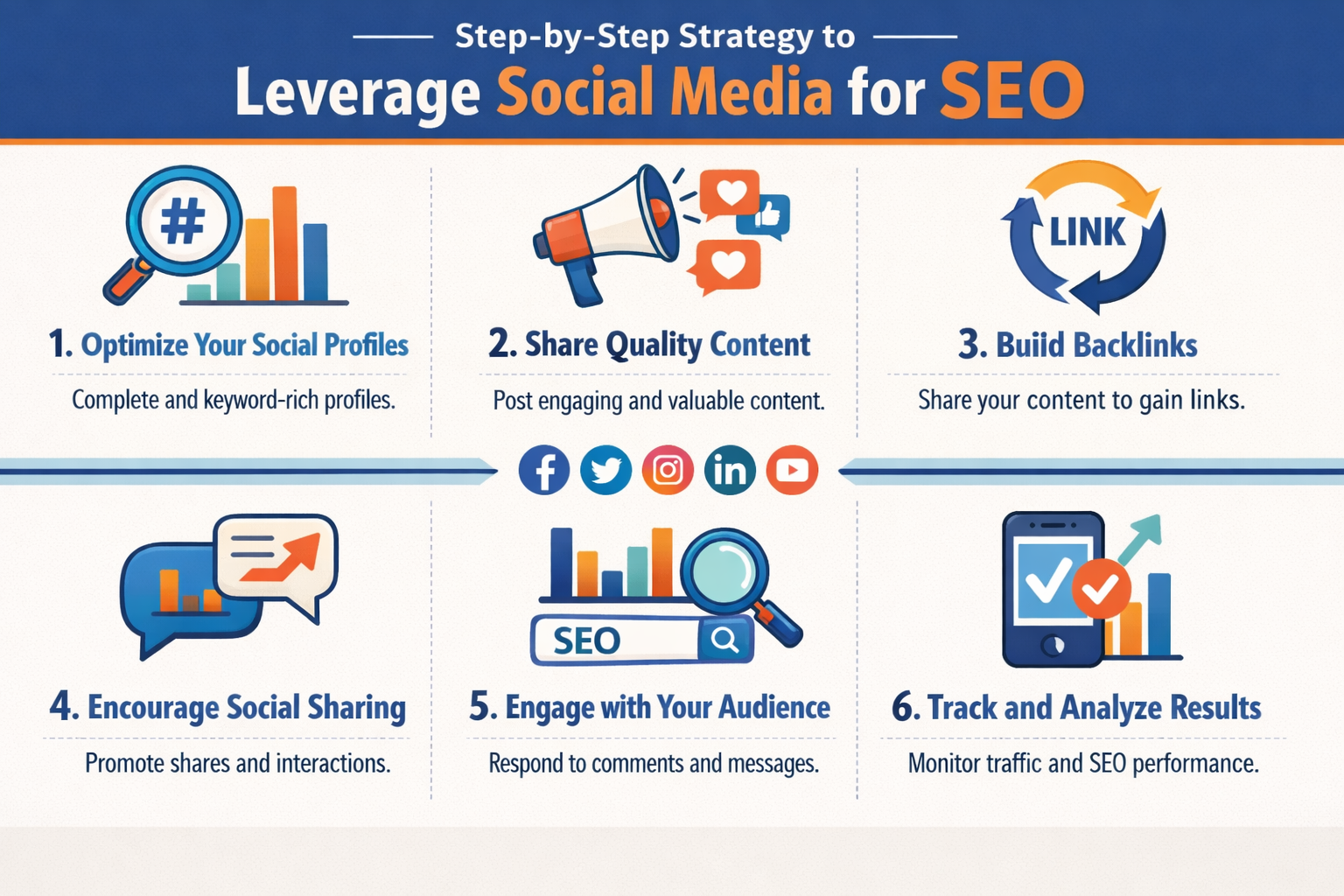
Let’s break it down into simple steps.
Step 1: Optimize Your Social Profiles
Your profile is your digital identity.
Make sure to:
- Use your brand name clearly
- Add relevant keywords
- Include website links
- Use a professional logo
- Write a clear bio
This helps search engines understand your brand.
Step 2: Share High-Quality Content
Content is the core of SEO.
Post:
- Blog articles
- Guides
- Tips
- Videos
- Infographics
Keep your content simple and useful. Focus on solving problems.
Step 3: Use Keywords in Social Content
Just like SEO, keywords matter on social media.
Include keywords in:
- Captions
- Hashtags
- Descriptions
- Video titles
This improves discoverability.
Step 4: Build Engagement
Engagement is a strong signal.
Encourage users to:
- Like
- Share
- Comment
- Save
Reply to comments quickly. Build real conversations.
Step 5: Promote Blog Content
Every blog post should be shared on social media.
Use:
- Catchy headlines
- Short descriptions
- Strong visuals
This drives traffic to your website.
Step 6: Use Hashtags Smartly
Hashtags help users find your content.
Tips:
- Use relevant hashtags
- Avoid spammy tags
- Mix popular and niche hashtags
Step 7: Collaborate with Influencers
Influencers can boost your reach.
They help:
- Increase visibility
- Build trust
- Drive traffic
Choose influencers in your niche.
Step 8: Focus on Video Content
Video content is growing fast.
Create:
- Short videos
- Tutorials
- Explainers
- Live sessions
Videos increase engagement and shareability.
Step 9: Encourage Social Sharing
Add social sharing buttons on your website.
Make it easy for users to share your content.
More shares = more reach.
Step 10: Track Performance
Measure your results.
Use tools to track:
- Traffic from social media
- Engagement rates
- Click-through rates
- Conversions
Improve based on data.
Social Media and AEO (Answer Engine Optimization)
Search is evolving rapidly. Today, AI tools like ChatGPT, Google’s AI-powered search, and voice assistants don’t just list links—they provide direct answers. This is where Answer Engine Optimization (AEO) comes in. Social media can play a key role in helping your content get featured in:
- Featured snippets – those highlighted boxes at the top of Google search results.
- AI overviews – concise summaries generated by AI tools.
- Voice search results – answers spoken by devices like Alexa or Google Assistant.
But how can social media help your content achieve this? Here are the key strategies:
1. Create Clear Answers
Write content that is simple, direct, and easy to understand. Avoid long-winded explanations. Break down complex ideas into digestible sentences. For example, answer questions like:
“How do I fix a leaking faucet?”
Instead of a long article, provide a step-by-step solution with concise instructions.
2. Use Structured Content
Structured content is easier for AI to parse and present. Use:
- Headings and subheadings
- Bullet points and numbered lists
- Tables and highlights for key information
This helps search engines, AI, and voice assistants understand your content quickly and accurately.
3. Focus on User Intent
AEO is about answering real questions users are asking. Research common questions in your niche and directly answer them. Tools like social listening on platforms like Twitter, LinkedIn, and Facebook can reveal trending queries.
For example, instead of just posting “Best SEO tips,” answer a user’s intent:
“What are the top 5 SEO tips for small businesses in 2026?”
4. Build Authority
Consistent posting and engagement on social media builds trust with both users and AI systems. The more authoritative your content appears, the more likely it is to be featured in AI-generated overviews and voice search results.
- Post regular updates and tutorials.
- Share valuable insights from your niche.
- Engage with your audience to boost credibility.
Social Media for EEAT
EEAT stands for Experience, Expertise, Authority, and Trust—four essential factors that help build credibility in modern SEO. Social media plays a powerful role in strengthening each of these signals when used strategically.
Experience
Show your real-world knowledge by sharing personal insights, practical examples, and case studies. This helps your audience understand that your content comes from actual hands-on experience.
Expertise
Educate your audience by posting valuable, informative, and well-researched content. When you consistently provide solutions and insights, people begin to see you as a knowledgeable source in your field.
Authority
Maintain an active presence across your social platforms. Consistency in posting, combined with meaningful content, helps position you as a recognized voice within your industry.
Trust
Build genuine relationships by engaging honestly with your audience. Respond to comments, answer questions, and be transparent—this fosters long-term trust and loyalty.
Common Mistakes to Avoid
Many businesses fail because of simple mistakes.
Avoid these:
1. Posting Without Strategy
Random posts do not work.
2. Ignoring Engagement
Social media is about interaction.
3. Using Too Many Hashtags
This looks spammy.
4. Not Tracking Results
You cannot improve what you do not measure.
5. Inconsistent Posting
Consistency builds trust.
Local SEO and Social Media
For businesses in Bangladesh, social media is key for local SEO.
Tips:
- Add location in posts
- Use local hashtags
- Engage with local users
- Join local groups
This helps you rank for local searches.
Content Ideas for Social Media SEO
Here are simple ideas:
- How-to guides
- SEO tips
- Case studies
- Client success stories
- FAQs
- Short videos
- Infographics
Keep content helpful and easy to read.
Future of Social Media and SEO
The future is clear.
Search engines are becoming smarter. AI is changing how users find information.
Trends to watch:
- AI-generated answers
- Voice search growth
- Video content dominance
- Personalized search
Social media will play a bigger role in all of these.
Final Thoughts
Social media is no longer optional. It is a core part of SEO. When used correctly, it can boost traffic, improve rankings, and build strong brand authority.
The key is consistency, quality, and strategy. Focus on helping users. Create valuable content. Engage with your audience.
If you want real results, you need expert guidance. A professional approach can save time and deliver better outcomes. Work with a trusted seo service provider in Bangladesh to grow your online presence and stay ahead of your competitors.