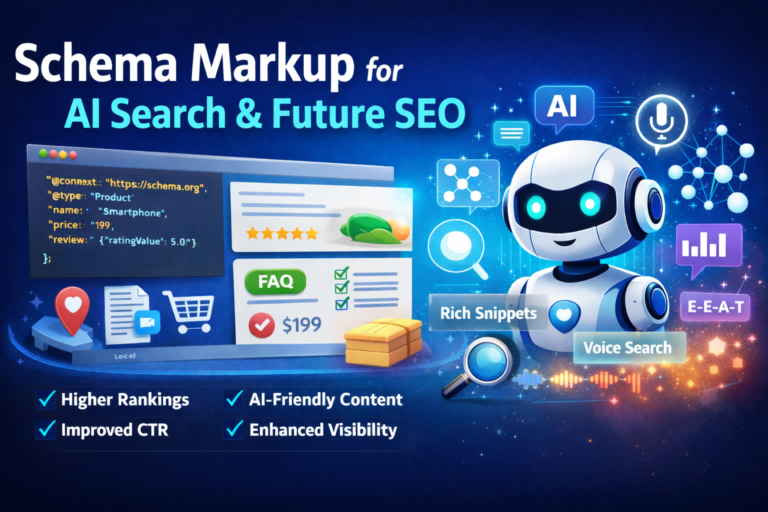
In today’s fast-changing digital world, understanding how search engines work is key to winning online. Many businesses still rely only on traditional SEO, but modern search now demands more clarity, structure, and context. That is where schema markup comes in. If you want your website to stand out in search results and AI-driven platforms, you need both strategies working together. As Golam Murshed Jony explains through real-world SEO experience, combining structured data with core SEO builds a powerful ranking foundation.
What is Traditional SEO?
Traditional SEO is the process of optimizing your website so it ranks higher on search engines like Google. It focuses on improving visibility using keywords, content, and backlinks.
Key elements of traditional SEO:
- Keyword optimization (using relevant search terms)
- On-page SEO (title tags, meta descriptions, headings)
- Technical SEO (site speed, mobile-friendliness, crawlability)
- Backlink building
- Content creation
Example:
If you write a blog about “wood fireplaces,” traditional SEO helps search engines understand your topic based on keywords and content.
What is Schema Markup?
Schema markup is a type of structured data added to your website’s code. It helps search engines understand your content in a more detailed way.
Instead of guessing what your content means, search engines get clear signals.
Simple explanation:
- Traditional SEO = Helps search engines find your content
- Schema markup = Helps search engines understand your content
Example:
Without schema:
- Google sees text about a product
With schema:
- Google knows the product name, price, rating, and availability
Why Schema Markup Matters Today
Search engines are evolving fast. With AI tools, voice search, and featured snippets, simple keyword optimization is not enough.
Schema markup helps you:
- Appear in rich results
- Get higher CTR (Click Through Rate)
- Improve voice search visibility
- Rank in AI-generated answers
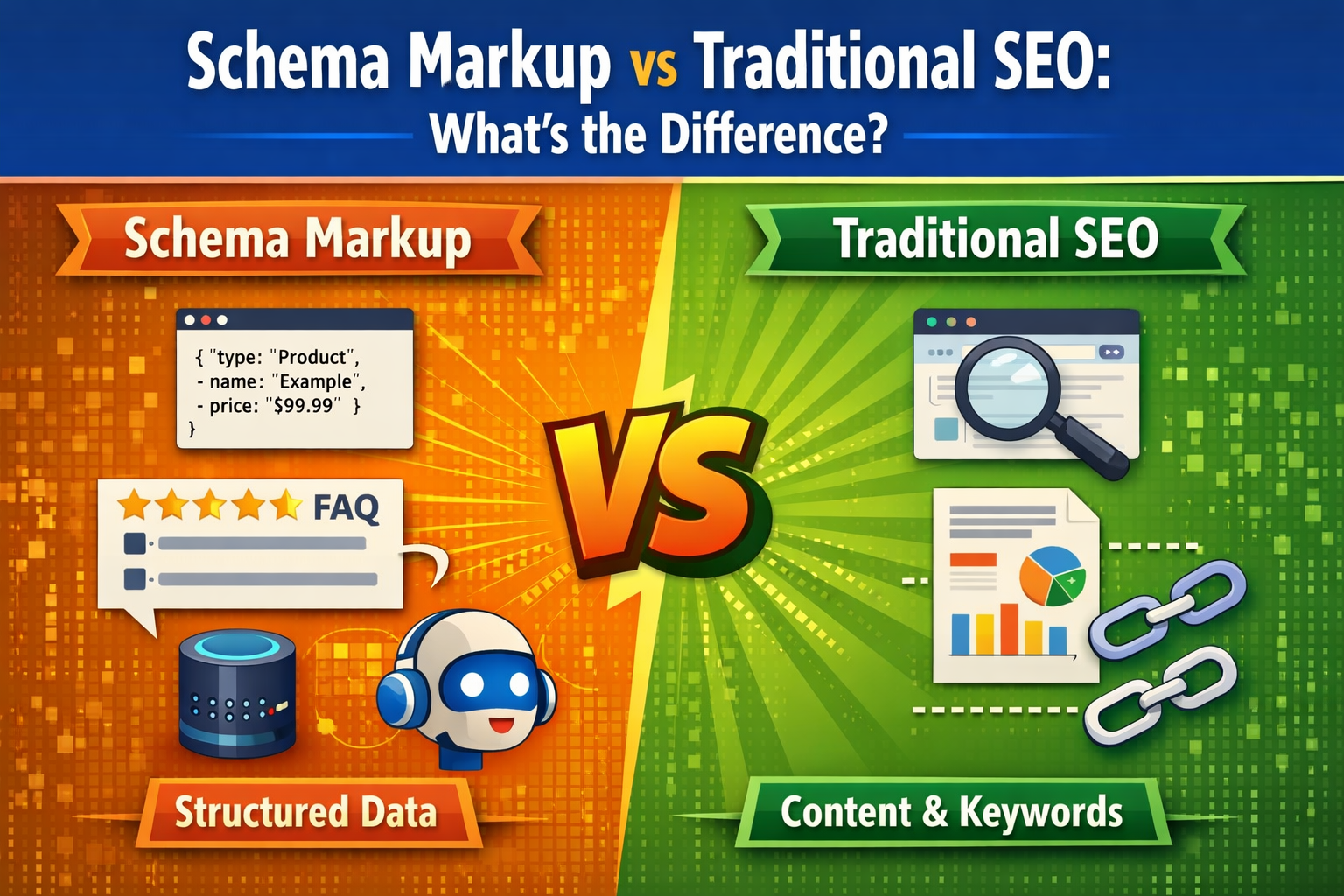
Core Difference: Schema Markup vs Traditional SEO
Let’s break it down in a simple way.
1. Purpose
- Traditional SEO helps search engines find and rank your content
- Schema Markup helps search engines understand your content better
2. Visibility
- Traditional SEO improves rankings
- Schema improves how your result looks in search
3. Data Type
- Traditional SEO uses text
- Schema uses structured data
4. Results
- Traditional SEO = better ranking
- Schema Markup = rich snippets, featured results
Why You Need Both Together
You cannot choose one and ignore the other.
Here’s why:
- Traditional SEO brings traffic
- Schema Markup improves click-through rate (CTR)
- Together, they boost total performance
Think of it like this:
- SEO brings users to the door
- Schema invites them inside
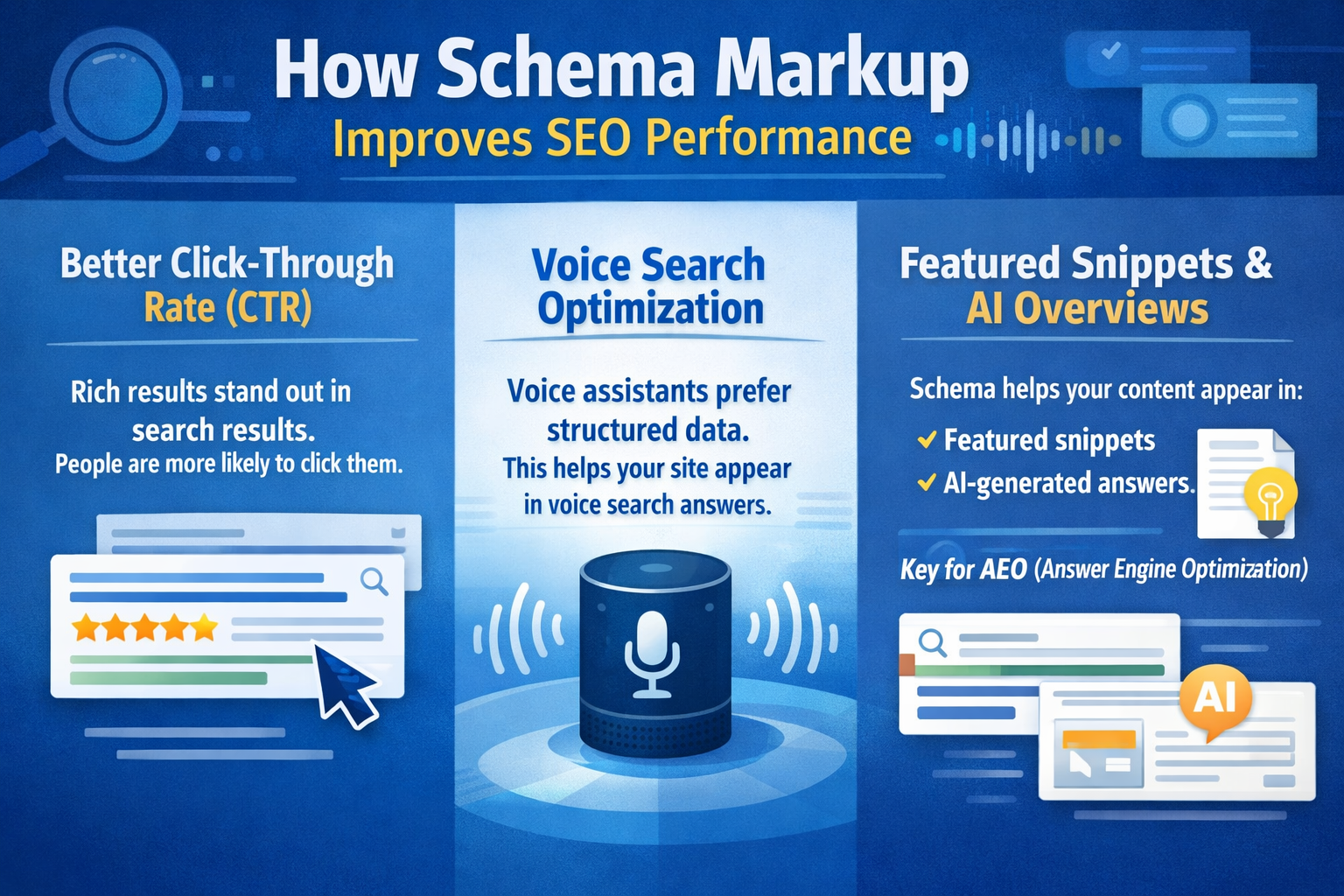
How Schema Markup Improves SEO Performance
1. Better Click-Through Rate (CTR)
Rich results stand out in search results. People are more likely to click them.
2. Voice Search Optimization
Voice assistants prefer structured data. This helps your site appear in voice search answers.
3. Featured Snippets & AI Overviews
Schema helps your content appear in:
- Featured snippets
- AI-generated answers
This is key for AEO (Answer Engine Optimization).
Read More On: The Benefits of Using Schema Markup for SEO
Types of Schema Markup You Should Use
1. Article Schema
Helps blogs rank better and appear in Google News.
2. FAQ Schema
Shows questions and answers directly in search results.
3. Local Business Schema
Perfect for GEO targeting and local SEO.
4. Product Schema
Displays price, reviews, and availability.
5. Breadcrumb Schema
Improves navigation and user understanding.
GEO Relevance: Why It Matters for Local SEO
If you run a business in a specific area, GEO optimization is key.
Example:
If your business is in Dhaka, your content should include:
- Location-based keywords
- Local schema markup
- Google Business Profile optimization
Benefits of GEO SEO:
- Higher local ranking
- More targeted traffic
- Better conversion rates
Using Local Business Schema helps search engines show your business to nearby users.
AEO: Optimizing for AI and Voice Search
Modern search is changing fast. AI tools like ChatGPT and voice assistants need clear answers.
What is AEO (Answer Engine Optimization)?
It means optimizing content so it answers questions directly.
How Schema Helps AEO:
- Provides structured answers
- Improves chances of featured snippets
- Helps voice assistants read your content
Tips for AEO:
- Use simple language
- Answer questions clearly
- Add FAQ schema
- Use short sentences
EEAT: Build Trust and Authority
Google values EEAT:
- Experience
- Expertise
- Authority
- Trustworthiness
How to Improve EEAT:
- Write real, helpful content
- Show author credibility
- Add contact details
- Use structured data
Schema Markup supports EEAT by giving clear business and author information.
Real-World Example: Traditional SEO vs Schema
Without Schema:
- Title: Best Fireplaces
- Description: Basic text
- Result: Normal listing
With Schema:
- Star ratings
- FAQs
- Price info
- Breadcrumbs
Result: More clicks and higher engagement.
Common Mistakes to Avoid
1. Ignoring Schema Markup
Many websites still do not use it.
2. Keyword Stuffing
Using too many keywords harms ranking.
3. Poor Content Quality
Even with schema, bad content will not rank.
4. Wrong Schema Implementation
Incorrect code can confuse search engines.
Step-by-Step Guide to Implement Schema
Step 1: Choose Schema Type
Pick based on your content (article, product, local business).
Step 2: Generate Code
Use tools like Google Structured Data Markup Helper.
Step 3: Add to Website
Insert JSON-LD code into your page.
Step 4: Test It
Use Google Rich Results Test.
Step 5: Monitor Performance
Check results in Google Search Console.
Benefits of Using Both Strategies
When you combine Schema Markup and Traditional SEO, you get:
- Higher rankings
- Better CTR
- Improved visibility
- Strong AI presence
- More qualified traffic
Future of SEO: Why Schema is Growing
Search engines are moving toward:
- AI-driven results
- Voice search
- Personalized content
In this future, Schema Markup will become even more important.
Traditional SEO alone will not be enough.
Quick Comparison Table
| Feature | Traditional SEO | Schema Markup |
| Type | Content optimization | Structured data |
| Goal | Ranking | Understanding |
| Output | Blue links | Rich results |
| AI Ready | Limited | High |
| Difficulty | Medium | Technical |
Final Thoughts
Both Schema Markup and Traditional SEO are essential today. One helps you rank. The other helps you stand out. Ignoring either means losing potential traffic and visibility.
If you want long-term success, you must combine both strategies. Focus on user intent, clear content, and structured data.
In today’s competitive market, working with a technical seo expert can help you implement advanced strategies and stay ahead of competitors.
You have not enough Humanizer words left. Upgrade your Surfer plan.