If you want more people to find your business online, you need SEO. Today, many businesses also need Local SEO. Both help your website appear in search results. But they work in different ways. A smart business owner should know the difference before investing time and money. Working with a local seo expert can help you reach nearby customers faster and improve your local search visibility.
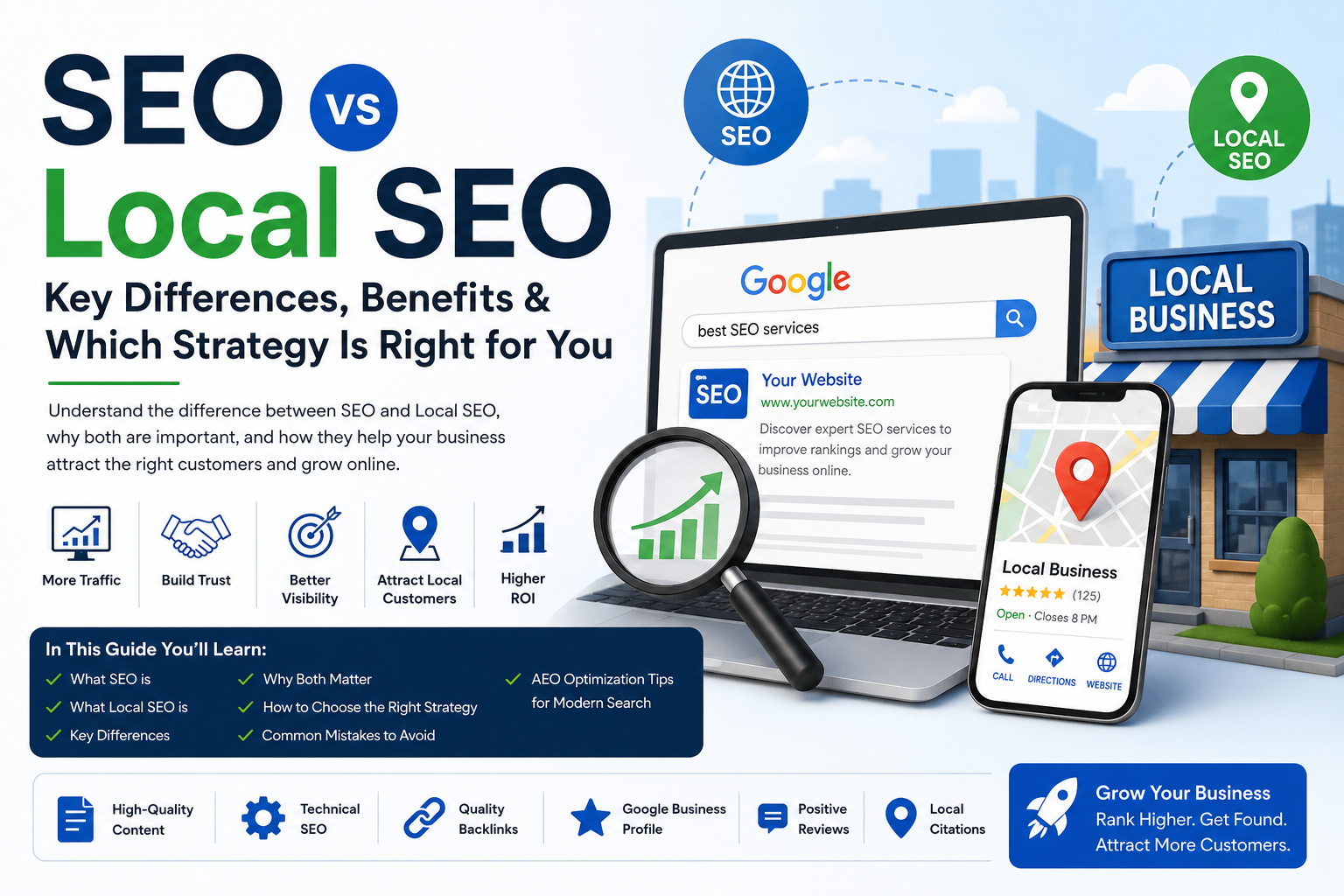
In this guide, you will learn:
- What SEO means
- What Local SEO means
- The key differences between them
- Why both matter for business growth
- How to choose the right strategy
- Common mistakes to avoid
- AEO optimization tips for modern search
This article is easy to read and written for beginners, business owners, and marketers.
What is SEO?
SEO stands for Search Engine Optimization. It is the process of improving your website so it ranks higher on search engines like Google.
The main goal of SEO is simple:
Get more organic traffic from search engines.
Organic traffic means visitors who find your website naturally without paid ads.
For example, if someone searches:
- “best outdoor fireplaces”
- “technical SEO services”
- “how to improve website speed”
Google shows websites it believes are the most useful. SEO helps your website become one of those trusted results.
How SEO Works
SEO helps search engines understand your content.
Google uses many ranking factors. Some of the most important include:
1. High-Quality Content
Your content should answer user questions clearly.
Good SEO content is:
- Helpful
- Easy to read
- Well-structured
- Informative
- Unique
2. Keyword Optimization
Keywords are words people search for online.
Example:
- “SEO services”
- “wood fireplaces”
- “how to do SEO”
You should naturally place keywords in:
- Titles
- Headings
- URLs
- Meta descriptions
- Image alt text
- Body content
3. Technical SEO
Technical SEO improves website performance.
This includes:
- Faster page speed
- Mobile-friendly design
- Secure HTTPS connection
- Clean site structure
- XML sitemap
- Proper indexing
4. Backlinks
Backlinks are links from other websites.
Google sees backlinks as trust signals.
Strong backlinks can improve rankings.
5. User Experience
Google wants users to have a good experience.
Your website should:
- Load fast
- Be easy to navigate
- Work well on mobile devices
- Provide useful information
What is Local SEO?
Local SEO is a type of SEO focused on local search results.
It helps businesses appear in searches made by nearby customers.
For example:
- “restaurant near me”
- “SEO agency in Dhaka”
- “coffee shop nearby”
Local SEO is very important for businesses that serve a specific location.
Examples include:
- Restaurants
- Dentists
- Local stores
- Law firms
- Home services
- Real estate agencies
- SEO agencies
How Local SEO Works
Local SEO helps your business show in:
- Google Maps
- Local search results
- Google Business Profile listings
When someone searches locally, Google considers:
- Distance
- Relevance
- Business reputation
Key Parts of Local SEO
1. Google Business Profile Optimization
Your Google Business Profile is one of the most important local SEO tools.
You should optimize:
- Business name
- Address
- Phone number
- Website link
- Business category
- Photos
- Reviews
- Business hours
2. Local Keywords
Local SEO uses location-based keywords.
Examples:
- “local SEO expert in Bangladesh”
- “best dentist in New York”
- “plumber in Toronto”
These keywords help Google connect your business with local customers.
3. Online Reviews
Customer reviews help build trust.
Positive reviews can improve local rankings.
Google values businesses with:
- Good ratings
- Frequent reviews
- Active responses
4. Local Citations
A citation is any online mention of your business.
Examples include:
- Yelp
- Yellow Pages
- Business directories
- Local listings
Your business information should stay consistent everywhere.
5. Local Content
Local content helps attract nearby users.
Examples:
- City service pages
- Local event blogs
- Area guides
- Location-specific landing pages
Main Difference Between SEO and Local SEO
The biggest difference is the target audience.
SEO focuses on reaching users anywhere.
Local SEO focuses on reaching users in a specific area.
Here is a simple comparison:
| SEO | Local SEO |
|---|---|
| Targets global or national audiences | Targets local audiences |
| Focuses on website rankings | Focuses on map and local rankings |
| Uses broad keywords | Uses location-based keywords |
| Important for online businesses | Important for local businesses |
| Focuses on organic search traffic | Focuses on nearby customers |
| Backlinks are very important | Reviews and local signals are very important |
Example of SEO vs Local SEO
Imagine you own an online fireplace store.
If you want customers from all over the country, you need SEO.
You may target keywords like:
- “best wood fireplaces”
- “modern fireplaces”
- “outdoor fireplaces”
Now imagine you also have a physical showroom in Dhaka.
You also need Local SEO.
You may target keywords like:
- “fireplace showroom in Dhaka”
- “wood fireplace store near me”
- “fireplace installation in Dhaka”
This helps nearby customers find your business.
Why SEO is Important
SEO helps businesses grow online.
Here are some major benefits.
More Organic Traffic
Higher rankings bring more visitors.
More traffic can lead to:
- More leads
- More sales
- More brand awareness
Better Brand Trust
People trust websites that rank on Google.
Good rankings improve credibility.
Long-Term Results
SEO can deliver long-term traffic without paying for ads every day.
Higher ROI
SEO often provides better return on investment compared to traditional advertising.
Why Local SEO is Important
Local SEO is essential for businesses with physical locations.
Attract Nearby Customers
People searching locally are often ready to buy.
Example:
Someone searching “coffee shop near me” may visit within minutes.
Improve Google Maps Visibility
Local SEO helps businesses appear in Google Maps.
This increases:
- Calls
- Directions requests
- Website visits
- Walk-in traffic
Increase Local Trust
Reviews and local presence help build community trust.
Mobile Search Growth
Many local searches happen on smartphones.
People search while traveling or shopping nearby.
Can a Business Use Both SEO and Local SEO?
Yes.
Many businesses should use both.
For example:
- eCommerce stores with physical locations
- Service businesses
- Restaurants with online ordering
- Local agencies serving national clients
Using both strategies gives better visibility.
You can attract:
- National traffic
- Local traffic
- Online customers
- Nearby customers
What is AEO Optimization?
AEO means Answer Engine Optimization.
It focuses on helping search engines and AI tools quickly understand your content.
Today, people use:
- Google featured snippets
- Voice search
- AI assistants
- Chat-based search tools
AEO helps your content appear in these results.
How to Optimize for AEO
Use Simple Questions and Answers
Add clear headings like:
- What is SEO?
- What is Local SEO?
- Why is Local SEO important?
Then provide short and direct answers.
Write Short Sentences
Easy content improves readability.
This also helps AI systems understand your content.
Add FAQ Sections
FAQ sections improve search visibility.
They also help with featured snippets.
Use Structured Headings
Use:
- H1
- H2
- H3
This improves content organization.
Focus on User Intent
Answer what users truly want to know.
SEO vs Local SEO: Which One Do You Need?
The answer depends on your business goals.
You Need SEO If:
- You sell products online
- You target national audiences
- You run a blog or online business
- You want global traffic
You Need Local SEO If:
- You serve a specific city or area
- You have a physical location
- Customers visit your office or store
- You provide local services
You Need Both If:
- You want local and national traffic
- You have both online and offline customers
- You want maximum visibility
Common SEO Mistakes
Avoid these common mistakes.
Keyword Stuffing
Do not overuse keywords.
Write naturally.
Thin Content
Short and weak content often ranks poorly.
Provide real value.
Ignoring Mobile Users
Most users browse on mobile devices.
Your website should work perfectly on phones.
Slow Website Speed
Slow websites hurt rankings and user experience.
Common Local SEO Mistakes
Inconsistent Business Information
Your business name, address, and phone number should match everywhere.
Ignoring Reviews
Respond to reviews regularly.
Poor Google Business Profile Optimization
Complete every section of your profile.
Using Wrong Categories
Choose the most accurate business category.
Tips to Improve SEO and Local SEO Together
Create Helpful Content
Write blogs that answer customer questions.
Optimize Website Speed
Fast websites perform better.
Build Quality Backlinks
Get links from trusted websites.
Use Local Landing Pages
Create pages for different service areas.
Add Schema Markup
Schema helps search engines understand your website.
Optimize for Voice Search
People use natural language when speaking.
Example:
- “Where can I find the best SEO expert near me?”
Frequently Asked Questions
Is Local SEO easier than SEO?
Local SEO can sometimes be easier because competition is smaller in local markets.
However, it still requires strategy and consistency.
Does every business need Local SEO?
No.
Online-only businesses may focus more on traditional SEO.
How long does SEO take?
SEO usually takes several months.
Results depend on:
- Competition
- Website quality
- Content
- Backlinks
- Technical optimization
Is Google Business Profile free?
Yes.
Google Business Profile is free to use.
Final Thoughts
SEO and Local SEO both help businesses grow online.
SEO helps you reach broader audiences.
Local SEO helps nearby customers find your business.
The best strategy depends on your goals.
Many businesses benefit from using both together.
Today, modern search also requires AEO optimization. Search engines and AI tools want clear answers, helpful content, and easy user experiences.
If you want better rankings, more traffic, and stronger visibility