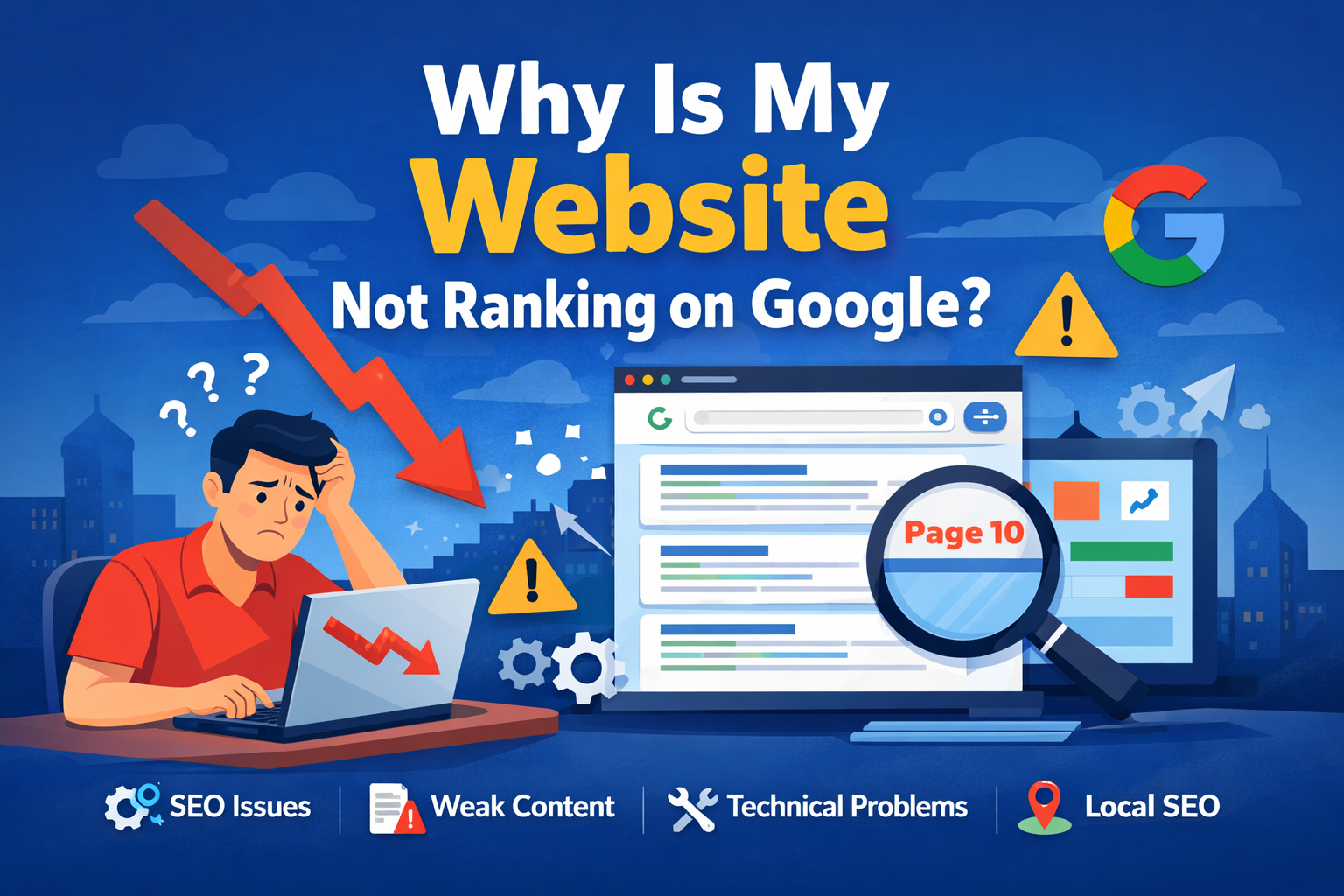
If you’re struggling to get traffic despite all your efforts, it’s time to ask: why is my website not ranking on Google? Businesses across Dhaka, Chittagong, and other major cities in Bangladesh face this exact problem every day. Hiring a Top SEO Expert in Bangladesh can often be the fastest way to diagnose and fix these issues. But before you do, it helps to understand the core reasons your site may be invisible to Google.
Search engines have evolved drastically. It’s no longer enough to sprinkle keywords in your content. Today, Google evaluates websites based on semantic relevance, user intent, local signals, and authority. Understanding these factors will empower you to take real action and improve rankings.
Understanding How Google Ranking Works
Before fixing the problem, it’s important to understand how Google ranks websites.
Google uses complex algorithms to evaluate millions of pages. It analyzes:
- Content quality
- Website authority
- Technical performance
- User experience
- Relevance to search queries
If your website fails in any of these areas, it may struggle to appear in search results.
The process generally involves three main steps:
1. Crawling
Google bots scan your website pages.
2. Indexing
Google stores your pages in its database.
3. Ranking
Google decides where your pages should appear in search results.
If your site fails during any of these steps, your rankings will suffer.
Common Reasons Your Website Isn’t Ranking
Even with excellent content and a beautiful website design, you might find yourself buried on page 10 of Google. Here’s why:
1. Focusing on Keywords Instead of Intent
Many businesses target generic keywords like:
- SEO services Bangladesh
- Best plumber in Dhaka
- Web design agency Chittagong
But Google doesn’t rank keywords anymore. Google ranks answers to users’ problems. If someone searches “How to fix website crawling errors?” and your content is vague, you won’t rank.
Solution:
Create content that directly solves a problem, using headings, FAQs, and structured data to match search intent.
2. Lack of Topical Authority
Google trusts websites that demonstrate expertise. A website with scattered blog posts and few internal links signals weak authority. For example, a Dhaka-based interior design firm with random blogs on unrelated topics won’t outrank a competitor with well-structured service pages, project portfolios, and case studies.
Action Plan:
- Build topic clusters: group related content under main service pages.
- Strengthen internal linking: guide visitors and search engines through your content.
- Showcase local expertise: include Dhaka neighborhoods or landmarks in your content.
3. Technical SEO Issues
If Google can’t crawl your website properly, ranking is impossible. Common technical issues include:
- Slow loading speed (Core Web Vitals issues)
- Broken links or 404 pages
- Poor mobile responsiveness
- Missing XML sitemap or robots.txt errors
Fix it by:
- Running a full SEO audit
- Optimizing page speed and mobile experience
- Ensuring proper indexing via Google Search Console
4. Poor User Experience (UX)
Google evaluates how users interact with your site. High bounce rates and low engagement indicate poor UX. Common issues:
- Complicated navigation menus
- Hard-to-read fonts or cluttered design
- Lack of clear call-to-action (CTA)
Improving readability, navigation, and mobile usability increases dwell time, signaling Google that your content is valuable.
5. Weak Local SEO Signals
For businesses in cities like Sylhet, Rajshahi, or Khulna, local relevance matters. Google prioritizes businesses that appear trustworthy in their local area. Missing signals include:
- Incomplete Google Business Profile
- No local citations or directory listings
- Lack of NAP (Name, Address, Phone) consistency
Tip: Include neighborhood names, landmarks, and city-specific pages to strengthen GEO relevance.
6. Content Doesn’t Answer AI or Voice Queries
With AI-powered search tools like Google AI Overviews and ChatGPT, your content needs to be AI-friendly:
- Include structured summaries
- Use FAQs with concise answers
- Optimize for voice search and conversational queries
Without these, AI systems might skip your content, giving competitors an edge even if your website looks perfect.
7. Backlinks Without Foundation
Many businesses focus on link building but ignore structure. Backlinks are important, but if your site lacks proper headings, schema markup, or clear answer blocks, those links won’t help.
Solution: Build a strong technical and content foundation first, then acquire quality backlinks from trusted sources.
8. Unrealistic Expectations
SEO is not instant. If you expect results in 30 days, you’ll be disappointed. Effective SEO requires:
- 3–6 months for competitive niches
- Consistent content updates
- Authority building and AI optimization
Patience and strategy are key to sustainable rankings.
9. Google Penalties or Algorithm Updates
Sometimes websites lose rankings due to Google algorithm updates.
Updates target:
- Spammy backlinks
- Thin content
- AI-generated low-quality content
- Keyword stuffing
If your site violates Google’s guidelines, rankings may drop dramatically.
How to Recover
- Audit your backlinks
- Remove spam links
- Improve content quality
- Focus on EEAT signals
The Importance of EEAT in Modern SEO
Google now prioritizes EEAT:
- Experience
- Expertise
- Authority
- Trustworthiness
To improve EEAT:
- Show author credentials
- Publish expert insights
- Earn mentions from trusted websites
- Add business contact information
EEAT signals help Google trust your content.
Step-by-Step Strategy to Fix Ranking Issues
Here’s a proven framework to get your website ranking again, optimized for SEO, AEO, and local relevance.
Step 1 – Conduct a Technical Audit
- Check crawlability and fix broken links
- Optimize Core Web Vitals (speed, interactivity, visual stability)
- Ensure structured data markup for products, services, and FAQs
- Implement an organized site architecture
This ensures Google can easily understand and index your site.
Step 2 – Map Content to Search Intent
- Identify user queries relevant to your business
- Create direct answer blocks at the top of pages
- Organize content around real questions and needs
This aligns your content with Google’s AI-first algorithms and voice search queries.
Step 3 – Build Topical Authority
- Develop content clusters around main services
- Use internal linking to connect related topics
- Highlight local expertise by including city names, landmarks, and client case studies
This builds trust and signals authority to search engines.
Step 4 – Optimize for AI and Answer Engines
- Add FAQ schema and how-to structured data
- Include citations and references for facts
- Use conversational headings to target AI-generated answers
- Optimize for featured snippets and voice search
This ensures your content appears not only in search results but also in AI-generated summaries.
Step 5 – Strengthen Local SEO
- Claim and optimize your Google Business Profile
- Encourage service-based reviews mentioning local areas
- Maintain NAP consistency across directories
- Create city-specific landing pages targeting neighborhoods and nearby landmarks
Example: If you operate in Chittagong, include mentions of Patenga Beach, Foy’s Lake, or Agrabad business district to enhance local signals.
Step 6 – Monitor and Adjust
SEO isn’t static. Regularly monitor:
- Rankings for targeted keywords
- Organic traffic patterns
- Backlink quality and referral traffic
- User behavior metrics like bounce rate and dwell time
Adjust your strategy based on insights to maintain and improve rankings.
Key SEO Principles for 2026
To ensure long-term success, focus on these modern SEO principles:
- EEAT (Experience, Expertise, Authority, Trustworthiness): Showcase credentials, client testimonials, and portfolio items.
- Semantic SEO: Use related terms and entities naturally in content to signal depth.
- Local relevance: Integrate city names, landmarks, and regional nuances.
- AI and AEO optimization: Ensure your site is friendly for AI and voice assistants.
Following these principles positions your website as a trusted authority in your niche.
Why Businesses in Bangladesh Need Professional SEO Help
Many business owners try SEO themselves but struggle with the technical aspects.
SEO involves:
- Keyword research
- Technical optimization
- Content strategy
- Link building
- Local SEO
Without proper strategy, websites may remain invisible for years.
That’s why many companies choose to work with a Top SEO Expert in Bangladesh who understands the local market, search trends, and Google ranking factors.
Professional SEO guidance can dramatically improve search visibility, traffic, and revenue.
Final Thoughts
If your website isn’t ranking, it’s rarely due to a single mistake. The main reasons include:
- Lack of intent-focused content
- Weak topical authority
- Technical and UX issues
- Poor local SEO signals
- Failure to optimize for AI and voice search
The solution is a strategic, multi-layered approach combining technical SEO, authority building, local relevance, and AI optimization. By implementing these strategies and possibly working with a Top 10 SEO Expert in Bangladesh, businesses in Dhaka, Chittagong, and other regions can improve rankings, attract organic traffic, and grow sustainably.
Remember: SEO is not just about visibility; it’s about providing value, building trust, and serving your audience effectively.